If you trade or sell products online, the bottom line is that you’re going to want to increase the number of visitors to your website. No matter what your digital marketing strategy looks like – whether you’re pouring all your energy and resources into PPC and influencer campaigns or technical SEO and affiliate marketing – getting people to click through to your site is often the primary goal. Because from there, visitors can read about your brand, see what products and services you offer, and hopefully click through to ‘buy’.
The good news is that digital PR can make it even easier to reach that goal, and it’s particularly useful in increasing your site’s organic traffic. As digital PR professionals, it’s our job to score press hits and acquire those all important backlinks to drive traffic back to your website.
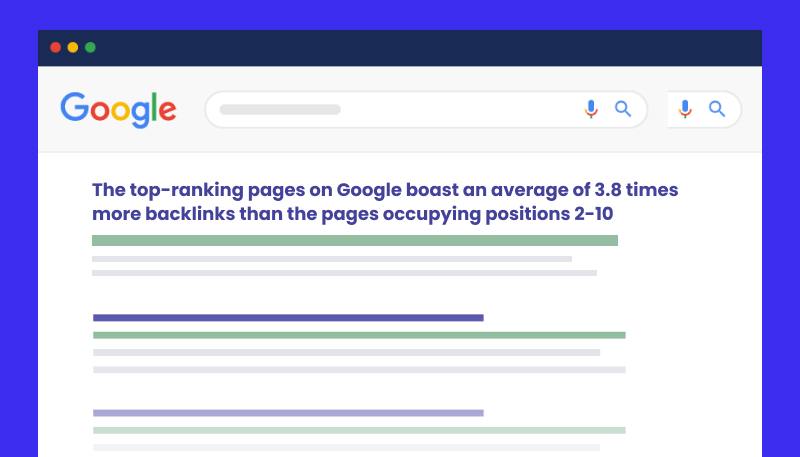
A large part of this is optimising your keyword rankings. Backlinks have long been recognised as a cornerstone of search engine optimisation (SEO) performance, and their influence on keyword rankings in particular can’t be overstated. In fact, the top ranking pages on Google boast an average of 3.8 times more backlinks than the pages occupying positions 2-10, which highlights just how critical backlinks are in determining where your website appears in search results. This is validated in the fact that 58.1% of SEO professionals agree that backlinks have a significant impact on rankings, with 1 in 10 experts identifying link building as the most valuable SEO strategy today.
So, when it’s done well, the links earned from a successful digital PR strategy can improve your website, keyword rankings and broader SEO performance. Keep reading to find out more.
What’s in this article:
- How does digital PR impact keyword rankings?
- What are keywords and keyword rankings?
- What other factors can impact keyword ranking?
- How digital PR boosts website traffic
- What are the different types of website traffic?
- Real examples of digital PR’s impact on website traffic
- How to measure the impact of digital PR on your website’s performance
- Key takeaways
How does digital PR impact keyword rankings?
Backlinks and domain authority are crucial components of SEO that directly impact keyword rankings, and this is where digital PR comes into play. Digital PR is a strategy used to increase a brand’s online visibility and reputation, and this approach is very effective for building high quality backlinks and improving your website’s domain authority – two things that have a really positive impact on keyword rankings.
By ‘backlinks’ we simply mean links from other websites that point to your site, and search engines like Google view these backlinks as endorsements or votes of confidence. The more high quality backlinks your site has from relevant and trustworthy sources, the more authoritative and trustworthy it appears to search engines, which can boost your keyword rankings over time.
But how do you earn those backlinks? Well, digital PR campaigns help to build them in a creative and organic way by securing media coverage in reputable online publications. When these publications link back to your site, it not only drives direct referral traffic but also signals to search engines that your site is credible, which then improves your keyword rankings – and your organic traffic.
Digital PR can also be instrumental in positioning your brand or key figures in your organisation as thought leaders through expert commentary like interviews and authored content. As you and your brand become recognised as leaders in your field, it’s more likely to attract organic backlinks from other sites referencing your insights – which goes a long way in positively impacting your keyword rankings.
On top of this, domain authority builds over time as your site accumulates high quality backlinks. Domain authority is a broader metric that reflects the overall strength of your website’s presence on the internet. While it’s not an ‘official’ Google ranking factor, it’s closely related to the likelihood of your site ranking well for keywords. The more authoritative sites that link to your content, the more your domain authority increases, which can enhance the overall ranking potential of your website.
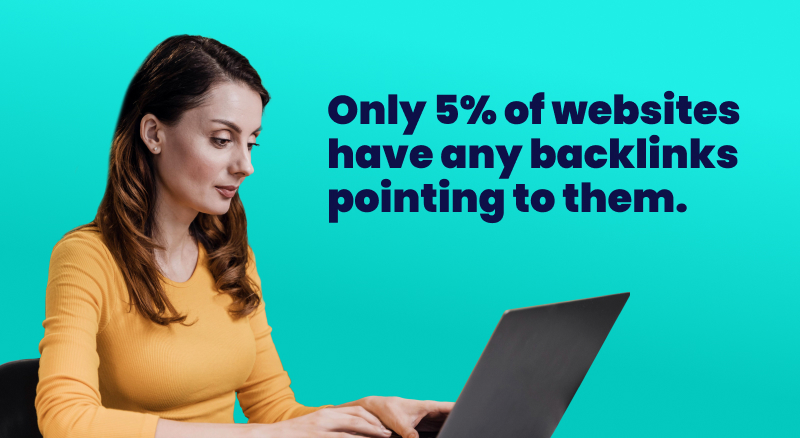
So overall, links from other reputable websites to your content signal to search engines that your site is trustworthy and authoritative, and a strong digital PR campaign can help you build those links to boost your keyword rankings. Despite the clear importance of backlinks, you might be surprised to learn that only 5% of websites have any backlinks pointing to them, making link building a highly sought after yet often underutilised tactic. But this means it’s a way for you to set yourself apart from your competitors!
What are keywords and keyword rankings?
Keywords are the terms or phrases that people type into search engines when trying to find specific information, products, or services online. You increase the likelihood that search engines will associate your site with appropriate user queries by incorporating relevant keywords into the content you publish online.
Search engines rely on keywords as a key component of their algorithms as they help to assess the relevance of content to a user’s search. When someone enters a search term, the search engine scans its indexed pages for content containing those keywords, looking at factors such as keyword frequency and placement as well as the context in which the keywords are used. The way keywords are used in your content directly impacts your keyword rankings and how your pages appear in search results.
Keyword rankings refer to the position your website holds on search engine results pages (SERPs) when a user searches for a specific term. Higher rankings generally lead to more visibility and traffic, as users are more likely to click on links that appear near the top of the results, rather than scrolling through and going on to page 2, 3 or so on.
How are keywords ranked?
Search engines look at a few different factors to decide where your content should rank for particular keywords including keyword relevance, the quality and originality of your content, user engagement metrics (like click through rates and time spent on the page), and the overall authority of your website.
The strategic use of keywords also plays an important role in signalling to search engines that your content is a good match for user queries – but it’s important to bear in mind that search engines are increasingly sophisticated and can understand the intent behind a user’s query. This means they don’t just look for exact matches but also consider related terms, synonyms, and the overall context of the content. So, it’s really important to write naturally and focus on providing genuinely valuable information to your audience.
Proper keyword placement, such as in the title, headings, meta descriptions, and throughout the body of your text, helps search engines understand the primary focus of your content. But it’s important to avoid “keyword stuffing,” or overloading your content with keywords. Search engines could penalise your site for this, which could have the opposite effect and actually reduce your rankings in the SERPs!
What other factors can impact keyword ranking?
There are a few other factors besides backlinks that can impact keyword ranking on search engine results pages (SERPs). Understanding these factors can help you optimise your content, which in turn will improve your website’s visibility. Here are eight key elements that typically impact keyword rankings:
1. Content quality and relevance
Search engines prioritise informative and original content. Content that provides value, answers questions, or solves problems for users is more likely to rank higher. Your content must also be relevant to the keywords you target, which means aligning your content with the search intent behind those keywords and ensuring that the information you provide is what users are actually looking for.
2. Keyword placement
Where you place keywords within your content matters. Keywords should appear in strategic locations such as the title, headings, meta descriptions, URL, and throughout the body text – but they should also be used naturally and in the right context. Proper use of headings and bullet points can also help organise content and signal to search engines that your content is structured well and ‘user-friendly’.
3. User engagement metrics
There are a few different user engagement metrics that can affect keyword rankings including:
- Click through rate (CTR): This is the percentage of users that click on your link when it appears in search results. A higher CTR indicates that your title and meta description are engaging and relevant to the user’s query.
- Bounce rate: If users quickly leave your site after clicking through, it can indicate that your content isn’t meeting their needs – this could negatively impact your rankings.
- Time on page: The longer users stay on your page, the more likely it is that your content is engaging and valuable, which can positively impact rankings.
4. Technical SEO factors
Page load speed is a key technical SEO factor that plays into keyword rankings as faster-loading pages provide a better user experience and are favoured by search engines. On the other hand, low pages can lead to higher bounce rates and lower rankings. And with the increasing use of mobile devices, it’s important to make sure that your website is optimised for mobile users, too.
5. SEO and search engine algorithm updates
Search engines like Google often update their algorithms, for example through Google Search Core Updates, and this can impact how keywords are ranked. Staying informed about these changes and adjusting your SEO strategies accordingly is very important for maintaining or improving your rankings.
For businesses targeting local markets, factors such as local citations, Google My Business listings, and local keyword optimisation can significantly influence keyword rankings, especially for location based searches.
How digital PR boosts website traffic
Digital PR boosts website traffic by securing high quality backlinks from authoritative and reputable sites. This then helps to enhance SEO performance and improve your brand’s search engine rankings. It also increases brand awareness through media coverage and social media engagement, driving both direct and referral traffic.
1. Building high quality backlinks
When your content is featured on authoritative sites, it not only drives direct referral traffic but also improves your site’s Search Engine Optimisation (SEO) performance. When search engines like Google crawl and index your website, they regard these backlinks as endorsements, which can boost how you rank in the search engine results pages (SERPs) for relevant keywords. Higher rankings lead to increased organic traffic as your website becomes more visible to users searching for keywords related to your brand. See point 4 for more info.
2. Enhancing brand awareness
Digital PR campaigns are designed to get your brand in front of huge audiences. By creating and distributing press releases and other engaging content, and getting featured in online publications, you’re gradually raising awareness about your brand. As more people become familiar with your brand, they are more likely to visit your website to learn more about your products or services, driving both direct and organic traffic.
3. Generating social media buzz
Well-executed digital PR campaigns often include a strong social media component. When your content is shared across various social media platforms, it reaches a broader audience and encourages shares, likes, and comments. This social media buzz not only drives direct traffic from social networks but also signals to search engines that your content is engaging and valuable, which can potentially improve your search rankings over time.
4. Improving search engine rankings
Digital PR contributes to improved search engine rankings through content marketing, backlink generation, and brand mentions. When your content appears on high-authority websites, it enhances your website’s domain authority. Also, creating newsworthy content and stories can result in higher engagement and lower bounce rates, which are positive signals to search engines. Improved rankings make it easier for potential customers to find your site when searching for relevant terms, which therefore increases organic traffic over time.
5. Driving referral traffic
When digital PR efforts result in your brand being mentioned or featured on popular websites, blogs, or news outlets, it generates referral traffic. Visitors who click on these links are directed to your website, often leading to higher engagement and conversion rates since they come from trusted sources. This targeted traffic is more likely to be interested in your brand, services and products, increasing the chances of conversions.
6. Creating evergreen content
Digital PR often involves creating content that remains relevant and valuable over time, such as expert tips and advice, and case studies. This evergreen content continues to attract visitors long after it is published, providing a steady stream of traffic to your website. As this content is shared and referenced by others, it can also lead to additional backlinks and social media mentions, further boosting your site’s visibility and traffic.
What are the different types of website traffic?
A well-rounded digital PR campaign should aim to gain traffic from different tactics and sources, so understanding the differences is essential for analysing the effectiveness of your digital PR and wider digital marketing efforts.
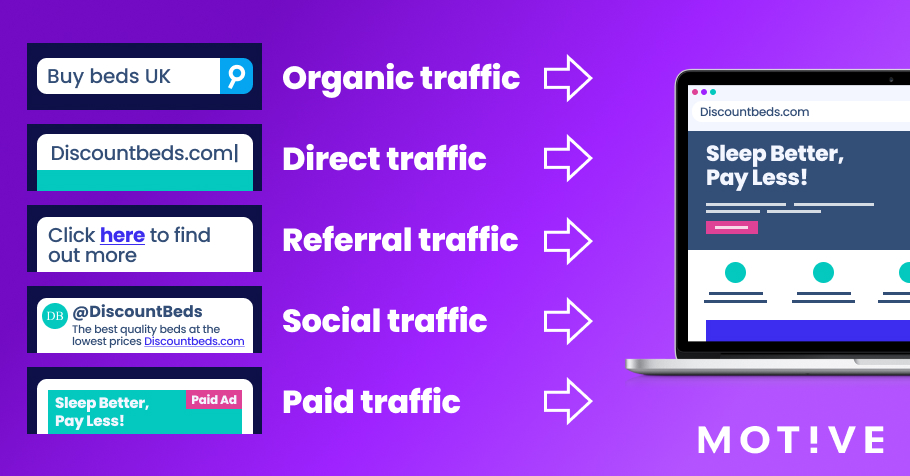
Here are the main categories of website traffic and how they can be improved:
Organic traffic
Organic traffic refers to visitors who arrive at your website through unpaid search engine results. This type of traffic is driven by search engine optimisation (SEO) efforts including off-page tactics like digital PR. This kind of activity can help your website rank higher in search engine results pages (SERPs) for relevant keywords, which increases the possibility of earning organic traffic to your site.
Direct traffic
Direct traffic comes from visitors who type your website’s URL directly into their browser or access your site via bookmarks and saved tabs/pages. This type of traffic often indicates a strong brand presence and loyal customer base, as it requires people to be familiar with your brand and actively seek out your site, rather than going to your competitors.
Referral traffic
Referral traffic comes from visitors who click on links from other websites that lead to your site. These can be links from blogs, news sites, directories, or other online platforms, which are some of the primary goals of digital PR. Effective digital PR and content marketing activity can really boost referral traffic by securing mentions and links from authoritative external sources.
Social traffic
Social traffic is generated by visitors who come to your website through social media platforms such as Facebook, X (formerly Twitter), LinkedIn, and Instagram. Social media marketing campaigns, engaging user-generated content (UGC), and influencer collaborations can drive significant social traffic to your website.
Paid traffic
Paid traffic results from visitors who arrive at your site through paid advertising campaigns including pay-per-click (PPC) ads, display ads, and social media ads, amongst others. Paid traffic can be highly targeted, scalable, and provides immediate results, making it a valuable tool for driving immediate traffic and conversions. However, it can also become expensive, and traffic and visibility typically stops when the ad spend ends.
Real examples of digital PR’s impact on website traffic
Fresh Air for Sale
Following the relaunch of their website and a domain change, luggage shipping website MyBaggage.com got in touch with us asking to create a buzz about their new brand and earn lots of high authority coverage to help raise their online visibility.
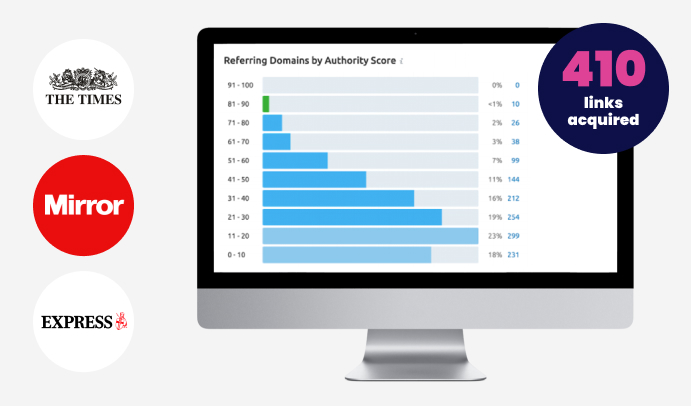
With the majority of MyBaggage customers being Brits moving abroad we focused on homesick expats and offered them bottled fresh air from each of the four UK home nations, England, Ireland, Scotland and Wales. We created a landing page for media to link to and tracked all results.
The campaign made headlines around the world and delivered 610 media placements along with 410 backlinks. Organic traffic to the site more than doubled and the site began ranking for a wide range of keywords.
Read more about our work with My Baggage here: https://www.motivepr.co.uk/work/mybaggage
Driver’s Champion
Our digital PR campaign for Lease Car UK has boosted organic traffic, enquiries and sales to two websites: LeaseCar.uk and sister site LeaseVan.co.uk. Our strategy has been to position the companies as consumer champions for motorists, attracting a huge level of media attention with thousands of coverage items and high authority backlinks pouring into both websites.

With a sustained approach and a very high level of results we have been able to massively boost the performance of both websites in organic search, helping the client to grow sales and expand into new premises. In a twelve month period, organic traffic for LeaseCar shot up by 20% and for LeaseVan the benefit was even greater with a 66% increase.
Read more about our work with LeaseCar and LeaseVan here: https://www.motivepr.co.uk/work/leasecar-uk
How to measure the impact of digital PR on your website’s performance
To effectively measure the impact of your digital PR activity on your website’s performance, you should aim to track a few different metrics.
1. Website traffic analysis
Use Google Analytics to monitor changes in your website traffic. Look for spikes in traffic that coincide with the launch of PR campaigns, or when content or backlinks are published. You can also track referral traffic to see how many visitors come from specific external sites, including news outlets and online media platforms.
2. Backlink quality and quantity
Tools like Ahrefs, Moz, and SEMrush help you track the number and quality of backlinks generated from digital PR efforts. You should also monitor changes in your website’s domain authority, which can improve with high quality backlinks. It’s important to remember DA changes will take place over time – Digital PR is unlikely to have a short term impact on this metric in particular.
3. Brand mentions and sentiment analysis
Set up Google Alerts and Talkwalker Alerts to track when your brand is mentioned online, or invest in a media monitoring tool. This also helps you keep track of your coverage. Tools like Mention and Meltwater can also help you analyse the volume and sentiment of those online mentions.
4. Social media metrics
Measure likes, shares, comments, and overall engagement on any social media posts related to your PR campaigns, and use Google Analytics to track traffic coming from social media platforms. An increase in social traffic generally indicates successful social media PR efforts.
5. Search engine rankings
Track changes in keyword rankings related to your PR and content marketing activity, as improved rankings for targeted keywords can drive more organic traffic. Use tools like Ahrefs and SEMrush to monitor changes in your SEO performance.
6. Engagement metrics
It might also be worth analysing how engaging your on-page content is by measuring the average time visitors spend on your site and the number of pages they visit per session. This is particularly relevant for content marketing campaigns, where you create linkable assets on your website. Are people staying on the page to digest your content? If not, you might need to rethink how it’s presented.
Read more about how to measure PR impact on our blog.
Key takeaways
- Digital PR turns coverage into search visibility. Every high quality link earned through PR sends strong trust signals to search engines, helping your pages move closer to the top of results.
- Authority builds momentum over time. The more your brand is mentioned and linked to by trusted publications, the easier it becomes to rank for competitive keywords.
- Traffic grows from multiple directions. Great campaigns boost organic search, spark referral visits, create social buzz and generate more direct brand searches.
- SEO success is bigger than keywords alone. Backlinks, user engagement, technical performance and helpful content all work together to influence rankings.
- Digital PR delivers measurable, lasting impact. From backlinks and rankings to traffic and brand mentions, the results can be tracked and continue long after coverage lands.
Ready to see what digital PR could do for your website? Speak to our friendly team about how digital PR could support your growth.

.jpg)
.jpg)
.png)